If you’ve been thinking about buying a static caravan, you’ve probably reached a moment where you start wondering about how to pay for it.
Caravan finance packages are offered by most parks – but if you’ve got a decent relationship with your bank, there’s also a good chance you’ve got access to some of their products, including personal loans.
So, should you choose specialist caravan finance? Or should you choose a personal loan? In this blog, we’ll explore the differences between the two funding routes, explaining the pros and cons of both options.
We’re not here to make financial decisions for you – everyone’s money business is both unique and their own. Instead, we’ll share everything we know – so you finish reading with the information you need to help you make the right choice for you.
Quick Answer
For most buyers, caravan finance tends to be a better fit – suiting a wider range of credit ratings and the reality of having a caravan. That said, a personal loan’s interest rate can look more attractive if you’ve got excellent credit and access to a good deal.
In reality, there’s no “better” option – there’s just the right one for you, the caravan you like, and your own personal circumstances.
What is Specialist Static Caravan Finance?
Specialist caravan finance is exactly what it sounds like – it’s a finance package designed by a lender that’s specifically for buying a caravan holiday home.
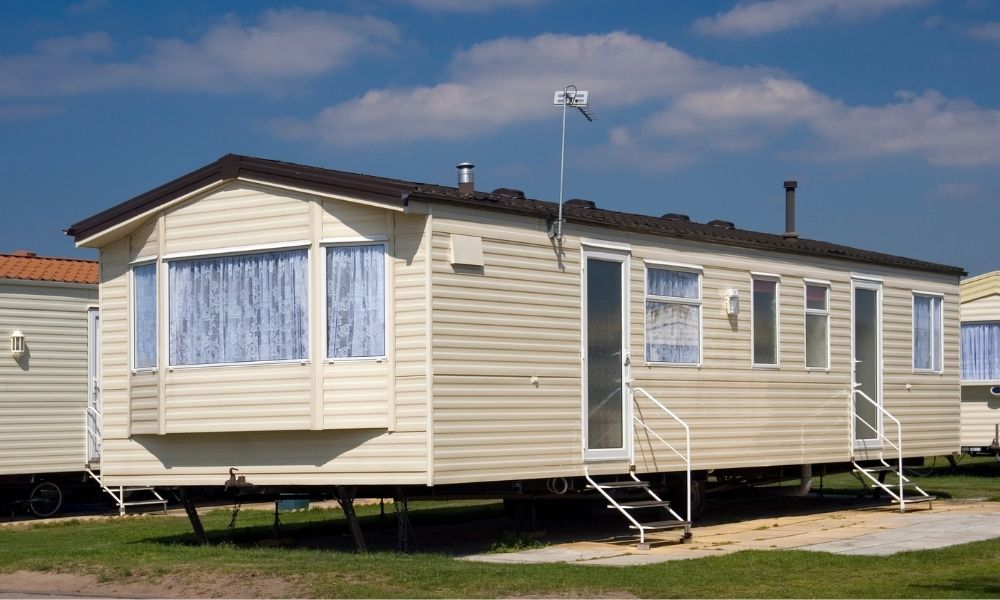
Typically, it’s arranged through the park of the dealer. These companies will usually have relationships with lenders who offer these products. They may offer a caravan loan from a single company – or they may have a number of different companies you can choose from.
Let’s look at some specifics of caravan finance packages:
Deposits
A deposit is usually between 10%-20% of the selling price of the caravan – as a minimum. In most cases, there’s no upper limit to the amount of deposit you can put down, so if you want to adjust your monthly repayment down, you could add a little more deposit.
Term
Typically, caravan finance is taken over a maximum of 7 years (84 Months). However, terms are typically adjustable – lowering it will increase your monthly payment but pay things off quicker. It’s worth noting that most lenders put an upper limit on the age of a caravan that can be bought using their finance package – so if it’s a slightly older caravan, you might find that the term is more limited.
Monthly Payments
Your monthly payment depends on a host of factors – including the term you’re borrowing over, the interest rate, and the amount of deposit you’re putting down. This actually makes caravan finance very flexible – since you can find numbers that work for your unique financial circumstances.
Application
In most cases, caravan parks are considered legal premises where you can sign your finance paperwork. This is helpful – since it means finding a caravan and finding a finance package can be done on the same day.
Overall
That covers a lot of what’s useful to know about caravan finance. It’s also worth saying that, most of the time, the caravan itself is used as security for the loan. This is similar to how car finance works – the lender reserves the right to repossess and sell the caravan should you ever run into issues and can’t/won’t pay for it.
For a lot of people, specialist caravan finance works well because it deals with the reality of having a caravan – it takes into account depreciation of the caravan, the park rules, and resale scenarios (like part exchanging).
If you want a deeper dive into how caravan finance works, you can take a look at our dedicated blog on Static Caravan Finance.
What is a Personal Loan, And How Do They Work For Caravan Purchases?
So, now we’ve covered caravan finance – what about personal loans?
This is an area more people are familiar with. You borrow a fixed amount from a bank or other lender, then repay it over a fixed term – and that’s it.
A personal loan is typically not secured to the caravan, has a fixed interest rate, and has fixed monthly payments. Since the loan isn’t secured (i.e. the bank doesn’t have anything to repossess if there are any problems) then the interest rate is sometimes a little higher than a caravan funding package – but this will often depend on your credit history.
From the park’s point of view, this is treated as a cash sale – since they’re not likely to be involved in the application process.
It’s worth noting that there are a few high street lenders that offer “holiday home loans” that are a kind of balance between a personal loan and specialist finance – but for most people, a personal loan is a straightforward unsecured loan from the bank.
Side-by-Side Comparison
| Factor | Specialist Caravan Finance | Personal Loan |
| Typical interest rate | Varies – often around 8-14% APR | Roughly 5-15% APR depending on credit |
| Deposit required | Usually 10–20% | Not required |
| Caravan used as security? | Sometimes (check terms) | No |
| Credit flexibility | Often more flexible – considers wider income types | Standard credit score criteria |
| Application process | Done via the park – usually streamlined | Independent – more admin |
| Early repayment | May include charges | Often penalty-free (check terms) |
| Best suited for | Most buyers, especially first-timers | Buyers with excellent credit |
Putting the two products next to each other, a few things stand out.
Firstly, specialist caravan finance is built to be as accessible as possible. It’s designed for real-world buyers – not just those with excellent credit ratings.
Secondly, personal loans of look cheaper and more attractive on paper – but this isn’t always the case when you apply. The rate you see is usually based on an excellent credit score. If your score could use a little work, you might find you don’t qualify for these best rates.
Finally, the experience of getting the loan itself is quite different. Caravan finance is part of the buying process at the park – whereas a personal loan usually involves going away and dealing with the finances separately.
When a Personal Loan Might Make More Sense
It might seem like we’re leaning towards caravan finance as the better option for most people – but this isn’t always the case. It’s important to know that there are plenty of situations where a personal loan might make more sense.
Typically, a personal loan will make more sense if you’ve got excellent credit, you want to avoid a deposit, and you prefer to keep your finances independent from your relationship with the park.
Let’s take a look at those things in a little more detail:
You’ve got Excellent Credit
If you’re eligible for a low-rate personal loan, the maths can work in your favour. Even just a couple of percentage points in APR can make a big difference to the amount you pay back over a number of years.
You Want to Avoid a Deposit
With a personal loan, you can potentially fund the whole purchase without finding 10-20% cash to use as a deposit. This can be useful if you want to keep your savings intact.
You Prefer Independence
When you use a caravan funding package, you’re somewhat tied to the options that the park offers. For some buyers, it can feel more comfortable to deal with the lender you choose – and manage your loan outside of the park experience.
When a Caravan Funding Package Makes More Sense
Of course, on the flip side to a personal loan, caravan finance can make a lot of sense. In fact, that’s the reason that so many buyers end up using it.
It’s generally more forgiving of a less-than-perfect credit score, it’s designed specifically for caravans, and it’s easier (and often quicker) to arrange.
Again, let’s take a look at each of those factors in more detail:
It Suits a Wider Range of Credit Scores
Although it’s hard to say for certain, it’s generally considered that less than 5% of people in the UK have a perfect credit score. If you do – good for you – but if you don’t, specialist lenders who provide caravan funding packages can be more flexible.
This is especially useful if you’re self-employed, have had previous issues with credit, or have a lower-than-perfect score for any reason.
It’s Designed for Buying a Caravan
This might sound obvious – but it matters that caravan finance is designed specifically for caravan.
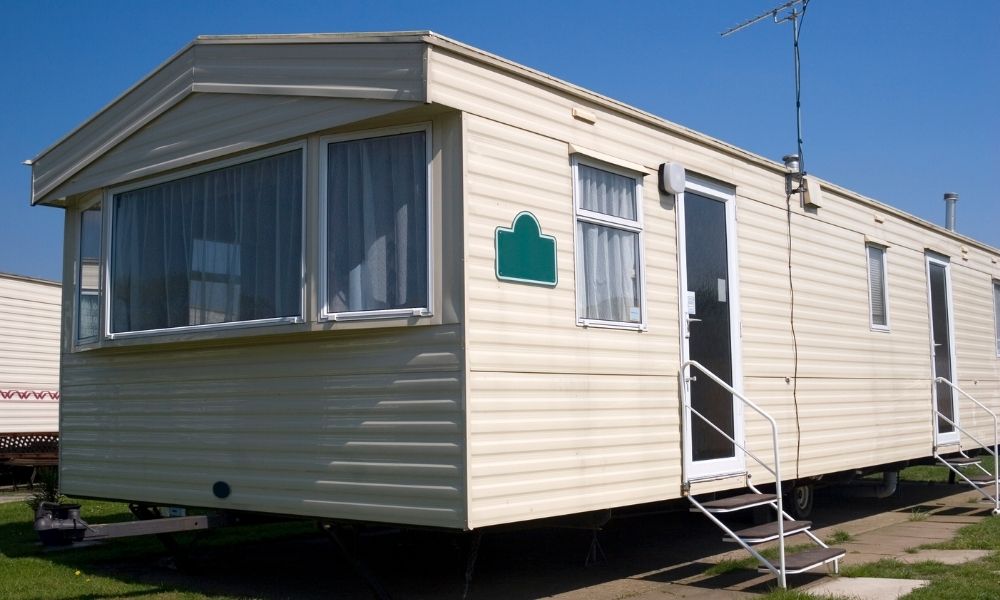
Caravans aren’t houses – they depreciate, they sit on land you don’t own, and they come with park rules. Specialist caravan finance is designed with all of those things in mind.
It’s Easier to Arrange
Since the application for caravan finance is dealt with by the park, the process tends to be smoother and quicker than going to the bank or applying online without knowing exactly how much you need.
That’s worth thinking about if you’re already juggling park visits, decisions, and paperwork.
What About Alternatives? Credit Cards and Borrowing from Family
Why are we comparing personal loans to caravan finance exactly? Aren’t there other options?
Well, there are – but they’re less popular than the two main options. However, that doesn’t mean they don’t exist for some people.
- Credit cards are rarely practical for full purchases due to limits
- Family loans can work, but come with obvious personal considerations
- There are also legal thresholds around large cash transactions (often referenced around £14,000), which can complicate things
For most people, it still comes back to the two main routes: specialist finance or a personal loan.
Questions to Ask Before You Sign Anything
Holiday Park Expert is designed with caravan buyers in mind – so this is the point where we slow things down a little and explain how to protect yourself, regardless of which option feels like it’s best for you.
It’s easy to let you heart win over your head when you’re buying something that’s as fun and beautiful as a holiday home – but before agreeing to anything, make sure you’re clear on:
- What is the APR – not just the monthly payment?
- What’s the total amount repayable over the full term?
- Are there early repayment charges?
- What happens if you want to sell or part-exchange the caravan?
- Is the caravan used as security for the loan?
- How flexible is the agreement if your situation changes?
These are exactly the kind of things you’ll want to ask when you visit a park – and it’s worth reviewing questions to ask about finance on the day so you don’t miss anything important.
FAQs
It’s absolutely normal to have questions about finances. We’ve covered some of the most common ones here:
Can I Get Caravan Finance with Bad Credit?
It can be possible. Specialist caravan finance is more flexible than standard lenders – but approval still depends on your overall financial health. It’s worth talking to the park about your unique circumstances before you commit to a visit.
Is Caravan Finance the Same as a Mortgage?
No, it’s quite different. Caravan finance is typically over a shorter-term and structured more like car finance than a mortgage. This is usually because caravans tend to go down in value over time – whereas houses typically increase in value.
Can I Pay Off Caravan Finance Early?
Usually, yes you can. However, if you feel like that’s something you might do – it’s well worth talking to the park or the lender about early repayment charges. Personal loans are sometimes a little more flexible here – but it depends on your lender.
What Deposit Do I need for Static Caravan Finance?
Typically, a deposit will need to be between 10%-20% of the overall value of the caravan package you’re buying – but it often depends on the caravan you’re looking at and your financial history.
Can I use a Personal Loan to Buy a Caravan on Any Park?
In most cases, yes you can. This is because the park will be considering it a cash sale. That said, every park has it’s own rules, so it’s worth double-checking before you plan any visits.
What Happens to Caravan Finance if I want to Sell the Caravan?
This really depends on the agreement. Typically, the park will handle the sale for you – paying off the finance company and giving any remainder to you. If the caravan sells for less than what’s owed, the finance provider will need to talk to you about settling the difference.
Final Thoughts
You’ve probably noticed that we haven’t mentioned which is “best” out of the options we’ve covered here – and that’s done on purpose. When it comes to buying a caravan, there is no “best” option – it’s far more about choosing the method that works for you.
Everyone’s credit profile is different, everyone’s savings are different, and everyone’s appetite for flexibility and the buying process are both also different.
For many people, specialist finance is the most convenient option – considering the buying process and realistic credit scores. That said, if you’re in a very strong financial position, a personal loan might be a better fit.
The key is to look at the numbers, ask the right questions, and understand the slight trade-offs for each option. When you’ve got your head around what each option looks like, there will usually be a stand-out option for you.